The Golden Age of Cardboard: Why Board Games Are the New Social Network
If you ask the average person to picture a board game, they likely recall a rainy childhood afternoon spent playing Monopoly. They remember the crushing boredom of rolling dice for three hours, the inevitable argument over a hotel on Park Place, and the board eventually being flipped in frustration. For a long time, board games were viewed as a relic of a pre-digital age—simple, luck-based time wasters for children. But while the world was busy staring at smartphones, a quiet revolution took place on the kitchen table. We have entered the “Golden Age of Cardboard,” an era where tabletop gaming has evolved into a sophisticated, billion-dollar industry that is reshaping how adults socialize.
The modern board game bears little resemblance to the roll-and-move endurance tests of the past. Today’s games are works of art and engines of complex strategy. We have “Eurogames” like Catan and Ticket to Ride, which prioritize resource management and indirect competition over eliminating players. We have massive, narrative-driven campaign games like Gloomhaven that weigh twenty pounds and take months to complete. This explosion in design creativity has turned gaming into a hobby that rivals cinema or literature in terms of depth. It is no longer about mindless luck; it is about intellectual engagement and solving a puzzle faster than your friends.
The primary driver of this renaissance is, ironically, technology. As our lives have become increasingly digital and disembodied, we have developed a desperate hunger for the tactile. We spend our workdays manipulating pixels on a screen; in the evening, we crave the sensation of holding a heavy wooden meeple, shuffling a deck of high-quality cards, or moving a plastic miniature across a map. The board game provides a physical anchor. It requires us to sit around a table, make eye contact, and read body language. It forces a level of presence that a Zoom call or a text thread can never replicate.
Furthermore, there has been a significant shift toward cooperative gameplay. In the past, games were almost exclusively adversarial—you won by making everyone else lose. Modern design has introduced the “Co-op” genre, exemplified by games like Pandemic, where players play against the game itself. You win together or you lose together. This dynamic is a perfect social lubricant. It removes the friction of conflict and replaces it with shared problem-solving. It allows a group of friends to feel like a team, creating a “us vs. the system” narrative that builds camaraderie rather than resentment.
This industry has also been supercharged by the rise of crowdfunding. Platforms like Kickstarter have allowed designers to bypass traditional publishers and pitch directly to the players. This has led to games with absurdly high production values—custom metal coins, double-layered player boards, and professional-grade artwork—that would never have been approved by a corporate toy company in the 1990s. The games themselves have become fetish objects, beautiful things to own and display on a shelf, creating a collector’s culture similar to vinyl enthusiasts.
Psychologically, board games offer a structured way to be social. For many adults, “hanging out” can feel unstructured and awkward. What do we talk about? How long do we stay? A game provides a “magic circle”—a temporary world with clear rules and a clear objective. It gives the group a shared purpose. It allows introverts to participate socially without the pressure of constant conversation, as they can focus their energy on the strategy of the game while still being part of the group.

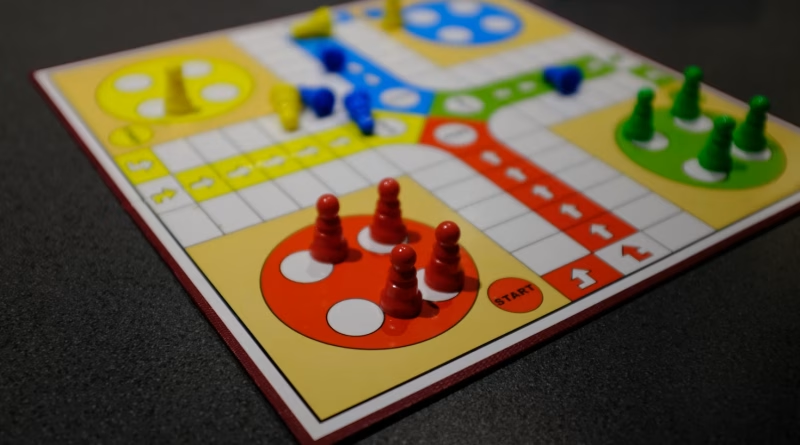
Beyond Monopoly: Modern games are engines of complex strategy and art.
Ultimately, the board game revival is a reclaiming of leisure time. In a world of infinite, on-demand digital entertainment that isolates us in our own algorithmic bubbles, choosing to play a board game is a deliberate act of community. It says that we value the company of the people in the room more than the content on our phones.
The dining room table has returned to its ancient role as the hearth. We gather around it not just to eat, but to play, to think, and to engage in the oldest human pastime: telling stories and testing our wits against one another, face to face.